
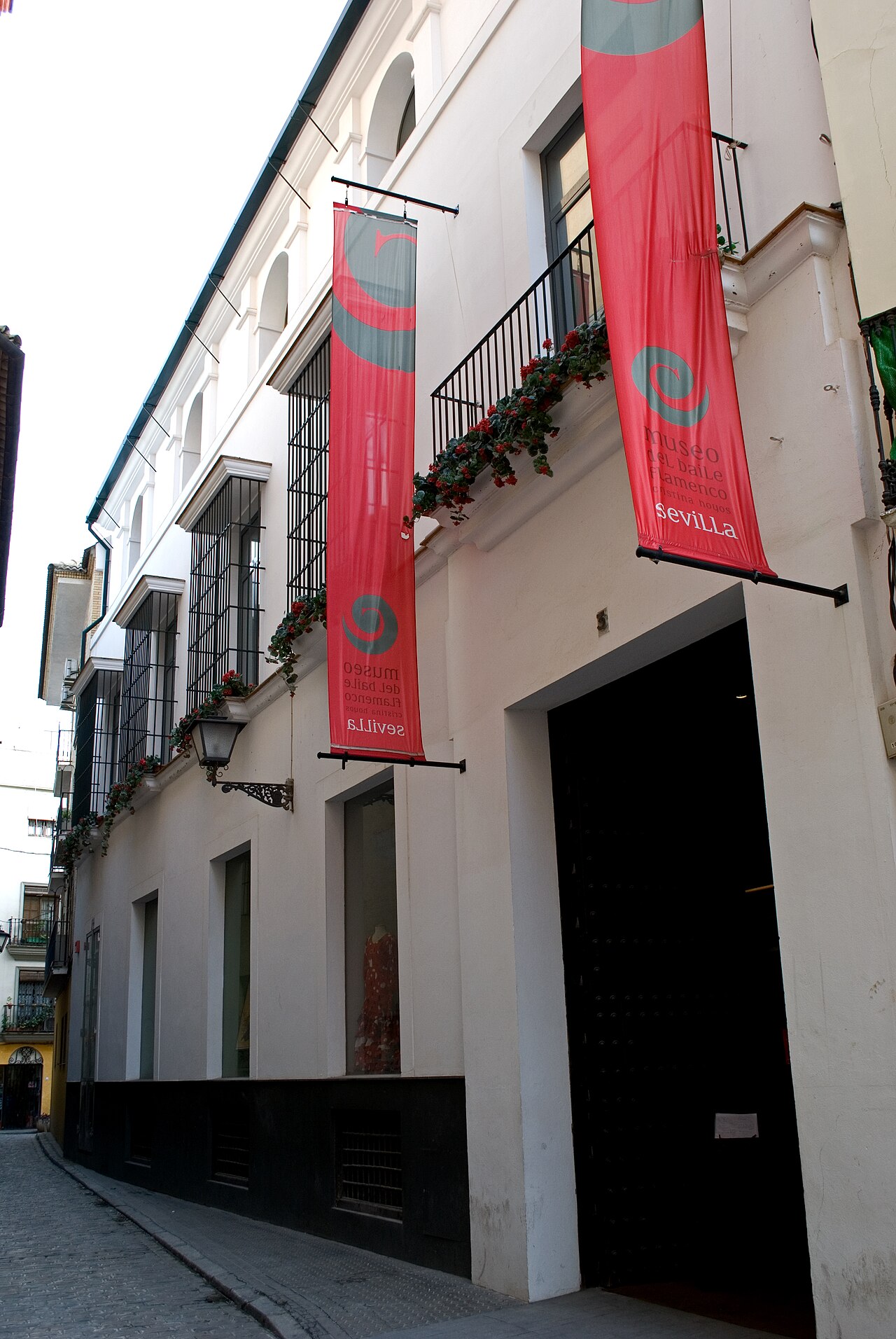
Photo: Anual, CC BY 3.0, via Wikimedia Commons

Seeing flamenco live is one of the best things you can do in Seville. The city has everything from polished nightly shows to tiny bars where musicians play for friends, and choosing well makes a big difference. This guide explains the main types of venue, picks out some of the best-known places, and gives practical tips so you can book with confidence.
Tablao, theatre, peña or bar: what is the difference?
- Tablaos are dedicated flamenco venues with a stage and a nightly programme of singing (cante), guitar (toque) and dance (baile). Many offer drinks or dinner. Shows usually last about an hour to an hour and a half.
- Small auditoriums and theatres seat a smaller audience close to the stage, with the focus on the performance rather than food. They are often the best value for a first show.
- Peñas flamencas are member-run clubs where aficionados meet for recitals. They are authentic and inexpensive, but programmes are irregular and aimed at locals, so check before going.
- Bars with flamenco host informal sessions, sometimes spontaneous. The atmosphere is relaxed and crowded, and nothing is guaranteed.
Where to see flamenco in Seville
These venues all appear in the city tourism office’s flamenco guide. Each link goes to our listing with the address, map and official website.
- La Casa del Flamenco (Santa Cruz): intimate shows in the patio of a 15th-century house.
- Tablao Los Gallos (Santa Cruz): one of the city’s oldest tablaos, in a small square.
- Casa de la Guitarra (Santa Cruz): a small room surrounded by historic guitars.
- Tablao El Arenal (El Arenal): a classic tablao near the bullring, with dinner options.
- Teatro Flamenco Triana (Triana): run by the Fundación Cristina Heeren flamenco school.
- Pura Esencia Flamenco (Triana): on Calle Betis by the river.
- Auditorio Álvarez Quintero (Centro): daily shows near the Cathedral.
- Tablao La Milonga (Centro): a compact room near the Alfalfa.
- La Carbonería (Santa Cruz): a famous, informal bar with flamenco on many nights.
- Peña Cultural Flamenca Torres Macarena (Macarena): a respected neighbourhood peña for aficionados.
Museums and flamenco culture
The Flamenco Dance Museum (Museo del Baile Flamenco), founded by the dancer Cristina Hoyos, explains the history and styles of flamenco with interactive displays and also stages evening shows. Casa de la Memoria, a cultural centre in a historic house on Calle Cuna, combines exhibitions with nightly performances. Both are good choices if you want context as well as a show.
The Bienal de Flamenco
Every two years Seville hosts the Bienal de Flamenco, one of the world’s most important flamenco festivals, with weeks of concerts in theatres and historic spaces across the city. The most recent edition ran from 9 September to 3 October 2026, and the festival is normally held in even-numbered years. Programmes are published by the city’s culture institute, ICAS. In other years, look out for flamenco cycles in the city’s theatres; we list the highlights each week in What’s on in Seville.
How to choose a show
- For a first visit, a small venue in Santa Cruz or Triana gives you a close-up view without a long dinner commitment.
- For dinner and a show, the larger tablaos are the easiest option, but check what is included before booking.
- Book directly on the venue’s official website where you can: you get the real timetable and avoid third-party fees.
- Arrive early. Seating is often unreserved and the front rows fill first.
- Photos and video are restricted at many venues, at least during the performance. Ask before you film.
- Children are welcome at most early shows, but late sessions can run close to midnight.
Learning flamenco
Seville is one of the best places in the world to study flamenco dance, guitar or singing. The Fundación Cristina Heeren in Triana runs professional training and short courses, and many dance academies in Triana offer classes for beginners. Short taster workshops are a fun option if you are only in the city for a few days.
Browse venues by neighbourhood: flamenco in Santa Cruz and flamenco in Triana.
Spotted something that has changed? Write to us at hola@misevilla.com and we will update this guide.
More guides

Seville on a Budget: How to Enjoy the City Without Overspending
Practical tips for visiting Seville on a budget: when to come, where to stay, eating well for less, free sights, cheap transport and the…

Empadronamiento in Seville: How to Register on the Padrón (and Keep It Valid)
How to register your address on Seville's padrón: booking the appointment, the documents you need, volante vs certificado, moving flat, renewals for non-EU residents…

Santa Cruz, Seville: a neighbourhood guide to the old Jewish quarter
How to explore Santa Cruz, Seville's old Jewish quarter: its history, the squares and lanes worth finding, when to go to avoid the crowds,…