
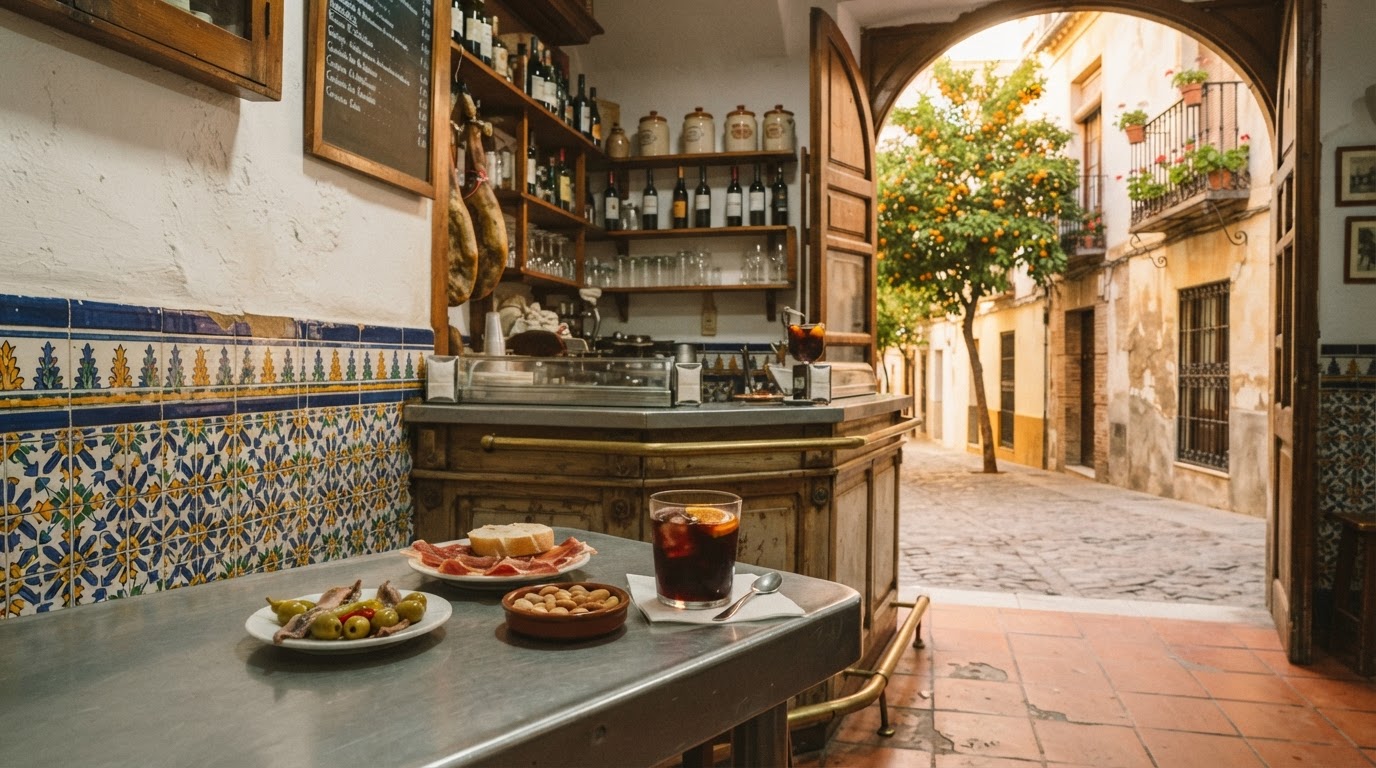
AI illustration
Seville is one of the easier Spanish cities to enjoy on a tight budget. The old town is compact enough to walk, many of its best views and squares cost nothing, and eating out is part of everyday local life rather than a luxury. The biggest savings, though, come from a few decisions you make before you arrive.
Pick your dates carefully
Accommodation prices jump sharply around Semana Santa and the April Fair, and spring weekends in general are in high demand. If the festivals are not the point of your trip, late autumn and winter are usually the best value, with mild days and far fewer crowds (see Seville in winter). High summer can also be cheaper, but the heat is serious; read Seville in summer before you book.
Where to stay for less
Staying right beside the Cathedral costs more. Triana, the Alameda and La Macarena are all within walking distance of the main sights and often have better-value hostales, hostels and apartments. Our where to stay guide compares the neighbourhoods, and you can browse hotels, hostels and apartments in the directory. Booking direct with small hotels sometimes gets a better rate or more flexible terms, so it is worth checking their own website.
Eat well without spending much
- Order tapas, not raciones. A few tapas at the bar is the classic way to try several dishes cheaply. Raciones are bigger sharing plates and add up fast. Start with what to eat in Seville and tapas in Triana.
- Look for a menú del día at lunch. Many neighbourhood restaurants offer a fixed-price weekday lunch with a starter, main, dessert or coffee and a drink. Lunch is the main meal in Spain, so this is often the best-value way to eat properly.
- Walk a few streets away from the monuments. Terraces facing the Cathedral and the Alcázar charge for the view. The same money goes further in Triana, the Alameda or around the markets.
- Use the markets. The Triana Market and the neighbourhood food markets are good for fruit, bread, cheese and picnic supplies, and some have small bars inside.
- Drink the tap water. Seville’s tap water is safe to drink, so a refillable bottle saves money in the heat. More in our tap water guide.
Sights that cost little or nothing
Some of Seville’s highlights are free: Plaza de España, María Luisa Park, the lanes of Santa Cruz and the riverside walk along Calle Betis. Several museums are free for some visitors or at certain times, and the Real Alcázar has offered free time slots that must be booked in advance on its official website. Our free things to do list has the full round-up, and the Alcázar tickets and Cathedral tickets guides explain how to avoid paying more than you need to.
For views, many of the best viewpoints are bridges and riverbanks rather than paid terraces. Free outdoor events also happen throughout the year; check our What’s on posts.
Getting around cheaply
Within the old town, walking is usually fastest and free. For longer trips, city buses and the metro are inexpensive, and a rechargeable bus card works out cheaper than single tickets if you will ride several times (see the bus card guide). Seville is flat and has plenty of cycle lanes, so bikes are another good option. Coming from the airport, the airport bus costs much less than a taxi: details in airport to city centre. You almost certainly do not need a car in the city; parking is expensive, as our car guide explains.
Mistakes that cost the most
- Buying monument tickets from resellers instead of the official websites.
- Booking a room in the centre during Semana Santa or Feria at the last minute.
- Eating every meal on the most touristy squares.
- Taking taxis for short hops you could walk in ten minutes.
Planning a longer trip? Our Seville in 3 days itinerary and day trips guide help you spread your budget sensibly.
Know a money-saving tip we’ve missed or spotted something out of date? Write to hola@misevilla.com and we will update this guide.
More guides

Empadronamiento in Seville: How to Register on the Padrón (and Keep It Valid)
How to register your address on Seville's padrón: booking the appointment, the documents you need, volante vs certificado, moving flat, renewals for non-EU residents…

Santa Cruz, Seville: a neighbourhood guide to the old Jewish quarter
How to explore Santa Cruz, Seville's old Jewish quarter: its history, the squares and lanes worth finding, when to go to avoid the crowds,…

What’s on in Seville: 16–25 November 2026
The best of Seville this week: the Seville derby, Javier Perianes at the Maestranza, Lorca's El Público at the Lope de Vega, Gemeliers, OBK…