
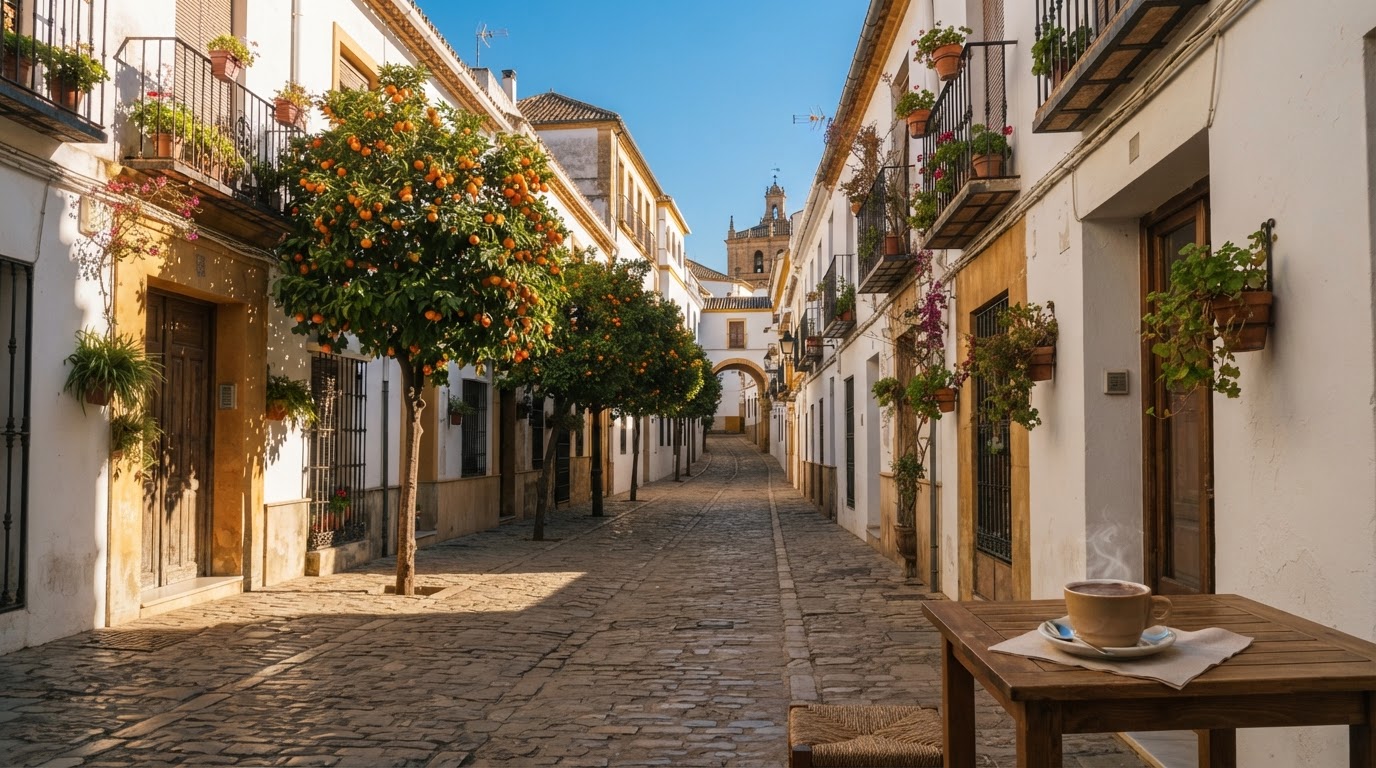
AI illustration
Winter is one of the most underrated times to visit Seville. The crowds and the heat are gone, the light is soft and golden, and on most days you can sit outside at lunchtime in a jumper. It is not tropical, though: nights are cold, it rains more than at any other time of year, and Sevillian homes are built to keep heat out rather than in. Here is what to expect and how to make the most of it.
What the weather is really like
According to the long-term averages published by AEMET, Spain’s state weather agency, for Seville airport (1981–2010):
- December: average highs around 16–17°C and lows around 7°C. It is the wettest month, with about 7 or 8 days of rain on average.
- January: the coldest month, with highs around 16°C and lows around 6°C, but still around six hours of sunshine a day on average.
- February: highs around 18°C and lows around 7°C; spring starts to show by the end of the month.
- November: still pleasant, with highs around 20°C, but autumn rain is common.
Snow almost never falls in the city, and frost is rare. Rain tends to come in spells of a few days followed by clear, bright weather, so a rainy forecast rarely ruins a whole week. Check the AEMET forecast a few days before you travel.
What to pack
- Layers: a warm jumper or fleece and a proper jacket for the evenings. The difference between a sunny midday and a damp night can be 10°C or more.
- A small umbrella and shoes that cope with wet, slippery stone pavements; polished marble and cobbles can be treacherous in the rain.
- Sunglasses and sun cream are still useful on clear days.
- Warm socks or slippers and something cosy to wear indoors (see below).
Cold houses: the thing nobody warns you about
Many visitors and newcomers are surprised that it can feel colder inside than outside. Older Seville buildings have thick walls, tiled floors and high ceilings designed for the summer, and central heating is far from universal. Heating usually comes from air-conditioning units with a heat pump or portable heaters. If you are booking a holiday flat or renting long term, ask whether the property has heating in the bedrooms and living room. Hotels are generally well heated.
Orange season
Winter is when the city’s famous street orange trees are loaded with fruit, which makes for beautiful photos against white walls and blue skies. These are bitter oranges, not eating oranges: they are traditionally used for marmalade (the “Seville oranges” sold in Britain) and for essences, so don’t pick one expecting a snack. The city council’s parks service harvests them through the winter. In spring the same trees fill the streets with the scent of orange blossom (azahar).
Christmas, New Year and Three Kings
From late November the centre fills with Christmas lights, nativity scenes (belenes) and Christmas markets; our Christmas in Seville guide covers them in detail. In Spain the big present-giving day for children is traditionally 6 January, Epiphany, and on the evening of 5 January the Three Kings parade (Cabalgata de los Reyes Magos) winds through the city throwing sweets to the crowds. Families should arrive early to get a good spot.
Winter public holidays to keep in mind: 6 December (Constitution Day), 8 December (Immaculate Conception), 25 December, 1 January, 6 January and 28 February (Andalusia Day). Many shops close on these days, while bars and restaurants usually open.
The best winter plans
- The big sights without the queues: the Alcázar and the Cathedral are far calmer than in spring, though Christmas week can be busy. Opening hours are often shorter in winter, so check our Alcázar tickets and Cathedral tickets guides before you go.
- Walking in the winter sun: midday is perfect for Plaza de España, the parks and the riverside. See parks in Seville and the best viewpoints.
- Flamenco: an intimate indoor show is a great winter evening; see our flamenco shows guide.
- Rainy days: museums, the aquarium and the Casa de la Ciencia; our hot or rainy days with kids guide has more ideas.
- Day trips: cool, clear days are ideal for Córdoba, Granada and the towns in our day trips guide. Granada is noticeably colder than Seville, so pack warmly.
A rainy-day plan: catch a film in English. Avenida 5 Cines and mk2 Nervión Plaza show new releases in original version with Spanish subtitles; see this week’s movies in English.
Eating and drinking in winter
Winter menus get heartier: chickpea and spinach stew (espinacas con garbanzos), pork cheeks (carrillada), stews and hot chocolate with churros for breakfast or an afternoon treat. Terraces stay open all year, and many have patio heaters, so eating outside in the sun at lunchtime is entirely normal. For more ideas, see what to eat in Seville and our food and drink section.
Good to know
- Apart from Christmas and New Year, winter is low season, so hotels are often cheaper; see where to stay and our places to stay.
- Days are short: in December the sun sets before 18:00, so plan outdoor sightseeing for the morning and early afternoon.
- The January sales (rebajas) start in early January; see shopping in Seville.
Sources: AEMET climate normals for Seville airport; Ayuntamiento de Sevilla.
Spotted something that has changed? Write to us at hola@misevilla.com and we will update this guide.
More guides

Seville on a Budget: How to Enjoy the City Without Overspending
Practical tips for visiting Seville on a budget: when to come, where to stay, eating well for less, free sights, cheap transport and the…

Empadronamiento in Seville: How to Register on the Padrón (and Keep It Valid)
How to register your address on Seville's padrón: booking the appointment, the documents you need, volante vs certificado, moving flat, renewals for non-EU residents…

Santa Cruz, Seville: a neighbourhood guide to the old Jewish quarter
How to explore Santa Cruz, Seville's old Jewish quarter: its history, the squares and lanes worth finding, when to go to avoid the crowds,…