
AI illustration
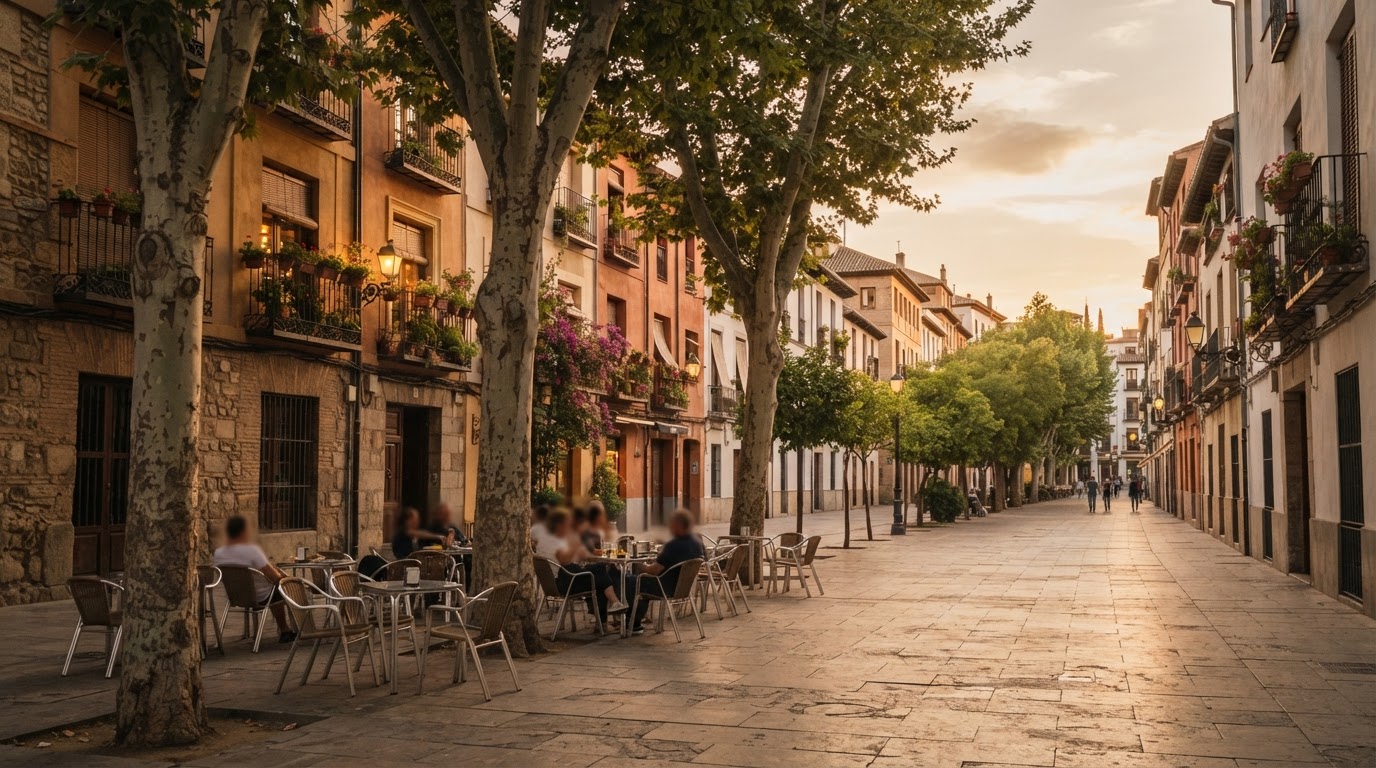
North of the Setas, the old town loosens up. The Alameda de Hércules is a long, tree-lined square where neighbours walk their dogs in the morning, children play in the afternoon and the terraces fill up after dark. Around it, Calle Feria, San Juan de la Palma and San Lorenzo are some of the most lived-in streets of the historic centre, with parish churches, a food market, an eight-century-old flea market and plenty of places to eat. It’s a ten-minute walk from Plaza de la Encarnación and a pleasant change from the busiest sights.
Spain’s oldest public garden
The Alameda was created in 1574, when the Count of Barajas, then the city’s chief magistrate (asistente), had a marshy pond left by an old arm of the Guadalquivir drained and turned into a promenade planted with poplars (“álamos”, hence the name), with fountains and irrigation channels. It is usually described as the oldest public garden in Spain and one of the oldest in Europe.
Look for the two pairs of columns at either end. The southern pair are genuine Roman columns brought from the remains of a temple on Calle Mármoles, in the old town, and they carry statues of Hercules, the city’s mythical founder, and Julius Caesar. The northern pair are later copies, topped in the 18th century with lions holding the shields of Seville and Spain. After a long decline in the 20th century the square was fully renovated by the city in 2006–2008, with traffic limited and new trees, benches, kiosks and fountains, and it has been a favourite meeting place ever since.
Calle Feria and the Thursday market
Calle Feria runs parallel to the Alameda a block to the east. Every Thursday morning it hosts El Jueves, Seville’s famous flea market of antiques, old books, records, tools and curiosities. Its first written mention dates from 1292, which makes it one of the oldest markets in Spain; it has been on Calle Feria since the 19th century. Go early, take cash and be ready to haggle a little.
On the same street, the Mercado de Feria is a neighbourhood food market with fresh produce stalls and small counters for a drink and a tapa. Mornings, again, are the time to see it working.
Palacio de las Dueñas
A few minutes south, on Calle Dueñas, the Palacio de las Dueñas is a Renaissance palace of the House of Alba with gardens, patios and rooms full of art and family collections. The general ticket with audio guide was €15 (reduced €11) when we checked, and entry is free on Monday afternoons from 16:00 with online booking and a €1 booking fee, while places last. It opens daily from 10:00 and closes earlier in winter than in summer; check the palace’s official website before you go.
Eating, drinking and evenings
The Alameda is one of Seville’s liveliest areas in the evening, with terraces along both sides of the square, bars with live music and an easy-going, local crowd. During the day it’s relaxed and good for families, with space for children to run around.
A few places from the directory: El Badulaque, an all-day bar-restaurant right on the Alameda, and Desacato on nearby Calle Amor de Dios, mixing Basque and Andalusian cooking. For more ideas, browse food and drink or our guide to what to eat in Seville.
When to go
- Thursday morning: El Jueves on Calle Feria, then the food market and a coffee on the Alameda.
- Afternoon: Palacio de las Dueñas (free on Monday afternoons if you book ahead).
- Evening: the terraces of the Alameda, especially on warm nights from spring to autumn.
- Holy Week: several of the neighbourhood’s brotherhoods process through these streets; see our Semana Santa guide.
Getting there and staying nearby
The area is easiest on foot: walk north from the Setas along Calle Regina or Calle Amor de Dios. Streets are narrow and parking is hard, so leave the car elsewhere; see our getting around guide.
It’s a good base if you prefer a neighbourhood feel to the tourist core of Santa Cruz, though the square itself can be noisy late at night at weekends. Options include Leyenda del Hereje, seven apartments with a rooftop pool on Plaza San Juan de la Palma. Browse places to stay or read where to stay in Seville.
Sources: Palacio de las Dueñas (official website); Universidad Pablo de Olavide (history of El Jueves). Spotted something out of date or missing? Tell us at hola@misevilla.com and we’ll fix it.
More guides

Convent sweets in Seville: how to buy from the nuns’ torno, and the Alcázar sale (4–7 December 2026)
Seville's enclosed nuns still bake yemas, bollitos, pestiños and jams and sell them through a revolving hatch. Where to buy, what to try, and…

Las Setas de Sevilla (Metropol Parasol): tickets, Aurora light show and best time to go
How to visit Las Setas (Metropol Parasol): what the ticket includes, prices and free entry, opening hours, the Aurora light show and when to…

Best time to visit Seville: month by month weather, festivals and crowds
When to visit Seville: spring and autumn are the sweet spots, summer is fiercely hot and winter is mild and quiet. Month-by-month weather, festivals…