
AI illustration
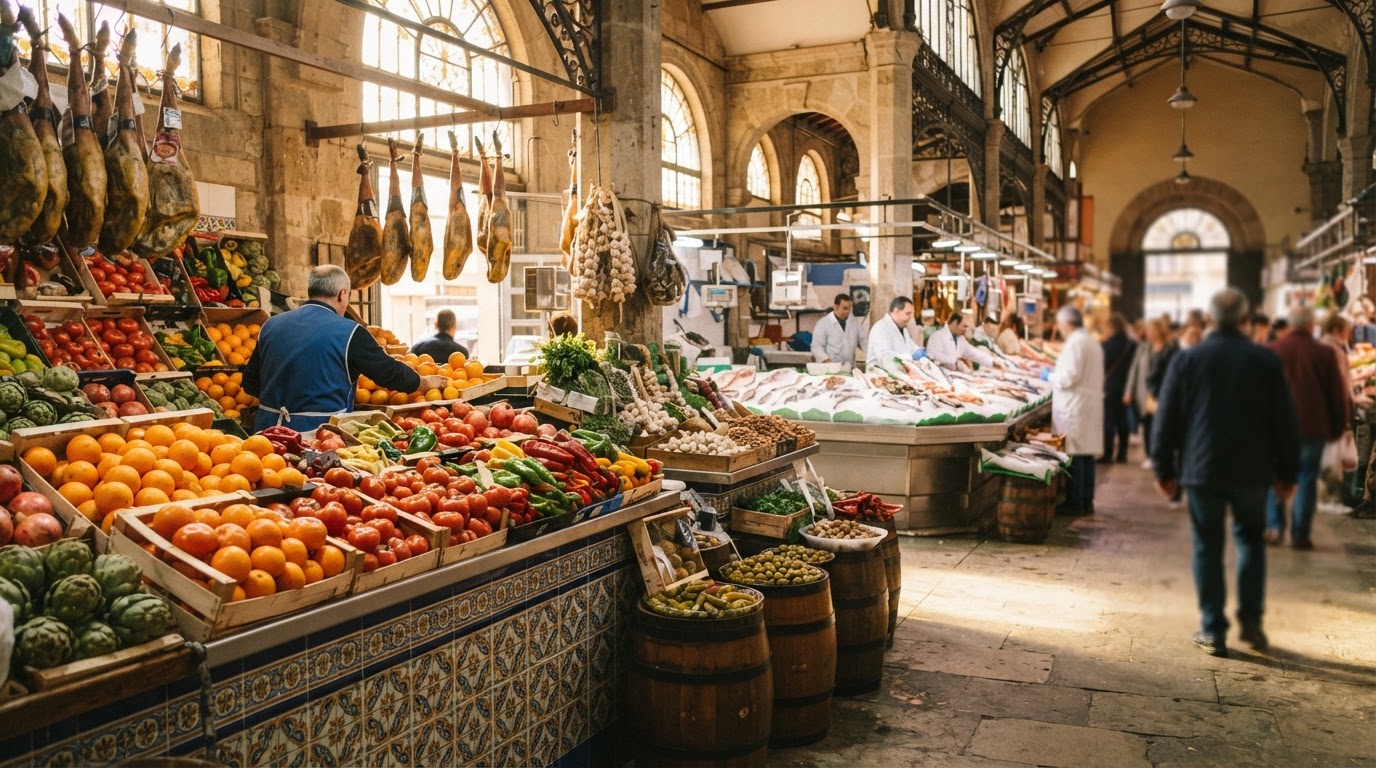
If you want to see how Seville really eats, skip the souvenir streets for a morning and walk into a mercado de abastos. The city’s covered food markets are where neighbours buy their fish, fruit and bread, where stallholders know regulars by name, and where you can often eat a tapa standing at a counter between the stalls. Here’s how they work and which ones are worth your time.
How Seville’s markets work
- Go in the morning. Most neighbourhood markets are busiest from about 9:00 to 13:00 and many stalls close by mid-afternoon. Some, like Arenal, reopen on weekday evenings.
- Sundays are mostly closed. Treat markets as a Monday-to-Saturday outing unless a listing says otherwise.
- Take cash and a bag. Many stalls take cards now, but small purchases are quicker in cash, and you’ll want your own shopping bag.
- Ask for a ticket number. At busy fish or meat counters, ask “¿quién es el último?” (who’s last?) and you’ll know your place in the queue.
- Shop online if you live here. Several municipal markets sell through the city council’s online markets platform, with delivery or locker pickup.
The markets worth knowing
Triana Market: the classic first visit
At the Triana end of the Isabel II bridge, the Mercado de Triana mixes fresh-produce stalls with tapas counters, so it works for both shopping and a casual lunch. It’s built over the remains of the old San Jorge castle, which you can visit next door. Combine it with our Triana neighbourhood guide.
Feria Market and the Thursday flea market
The Mercado de Feria, beside the Omnium Sanctorum church, is a working neighbourhood market with a few counters for tapas and drinks. Go on a Thursday morning and you can pair it with El Jueves, Seville’s oldest street market, which fills Calle Feria with antiques, books and curiosities. The Alameda is a few minutes away.
Encarnación Market, under the Setas
The Mercado de la Encarnación sits at street level beneath the giant wooden canopy of Las Setas. It’s a practical stop for fish, meat and vegetables right in the centre, and easy to fit around a visit to the rooftop walkway.
Mercado del Arenal: local and unpolished
Near the bullring, the Mercado del Arenal (1947) is a genuine neighbourhood market with fishmongers, fruit, eggs and bread, plus bars, crafts and ceramics stalls. Unusually, it opens on weekday evenings as well as mornings.
Puerta de la Carne: a market in an old station
The Mercado Puerta de la Carne opened in 2017 inside the passenger hall of the former Cádiz railway station, near Prado de San Sebastián. Bright and modern, it has butchers, fishmongers, fruit and home-cooked dishes to take away, and it’s very well connected by tram, metro and bus.
Las Palmeritas: Nervión’s everyday market
Open since 1977, Las Palmeritas is where Nervión does its weekly shop: meat, fish, ham and charcuterie, fruit, pickles and ready-made dishes. Worth knowing if you live or stay on the east side of the city.
Lonja del Barranco: a food hall, not a market
The Lonja del Barranco, in a 19th-century iron building by the river, is a gourmet food hall of bars and counters rather than a place to buy groceries. It’s good for grazing with a group, but don’t expect market prices.
Which market should you choose?
- First-time visitor: Triana, then a walk along Calle Betis.
- Thursday morning: Feria market plus El Jueves.
- Self-catering in the centre: Encarnación or Arenal.
- Living in Seville: your nearest neighbourhood market, such as Puerta de la Carne or Las Palmeritas, often with online ordering.
Hours change with the season and on holidays, so check each listing before you go. For more ideas, see what to eat in Seville, our food and drink section and Seville on a budget.
Sources: Ayuntamiento de Sevilla official municipal markets platform (mercadosdesevilla.es); individual market listings on MiSevilla.
Spotted something out of date? Tell us at hola@misevilla.com.
More guides

Alameda de Hércules and Calle Feria: a Seville neighbourhood guide
The Alameda de Hércules, Spain's oldest public garden, and the streets around Calle Feria: Roman columns, the Thursday flea market, Palacio de las Dueñas,…

Convent sweets in Seville: how to buy from the nuns’ torno, and the Alcázar sale (4–7 December 2026)
Seville's enclosed nuns still bake yemas, bollitos, pestiños and jams and sell them through a revolving hatch. Where to buy, what to try, and…

Las Setas de Sevilla (Metropol Parasol): tickets, Aurora light show and best time to go
How to visit Las Setas (Metropol Parasol): what the ticket includes, prices and free entry, opening hours, the Aurora light show and when to…